Law, Policy, and Governance
Foundational Outcomes:
-
Describe how national and state/provincial constitutions and laws influence the rights of students, faculty, and staff on all types of college campuses.
-
Describe evolving laws, policies, and judicial rulings that influence the rights of students, faculty, and staff on all types of college campuses
-
Identify major internal and external stakeholders, policymakers, and special interest groups who influence policy at the national, state/provincial, local, and institutional levels of law
-
Demonstrate awareness of inequitable, oppressive ways that laws and policies are enacted on vulnerable student populations at national, state/provincial, local, and institutional levels
How did I achieve these foundational outcomes?
Keeping up with Legislation
-
One area I have grown increasingly passionate about is understanding how federal and state legislation directly shapes the experiences of students in higher education. Over time, I’ve come to see policy not as something distant from student affairs practice, but as something that actively influences student access, belonging, and success. Because of this, I intentionally stay informed about legislation and institutional policy changes that impact students both in my state and at my institution.
-
This interest has also shaped my academic and co-curricular work. I have written papers analyzing newly passed laws and institutional instructional policies, using research to better understand their implications for students and higher education practice. In addition, I have conducted independent research and presented my findings to Indiana University Student Government (IUSG) members, helping translate complex policy issues into more accessible conversations for student leaders and advocates.
-
I also bring these updates and insights into classrooms, staff meetings, and conversations with administrators and stakeholders, to ground our practice in current policy realities. This ongoing engagement has reinforced for me the importance of advocacy, collaboration, and shared responsibility in student affairs work. I’ve learned that staying informed is not just about awareness, but about ensuring we are making decisions that anticipate and respond to student needs in real time. Ultimately, this work has deepened my belief that legislative awareness is an essential part of ethical, student-centered practice, and a commitment I will continue to carry forward in my career.

A Paper that I wrote based on a Florida Instructional Rule targeting CRT
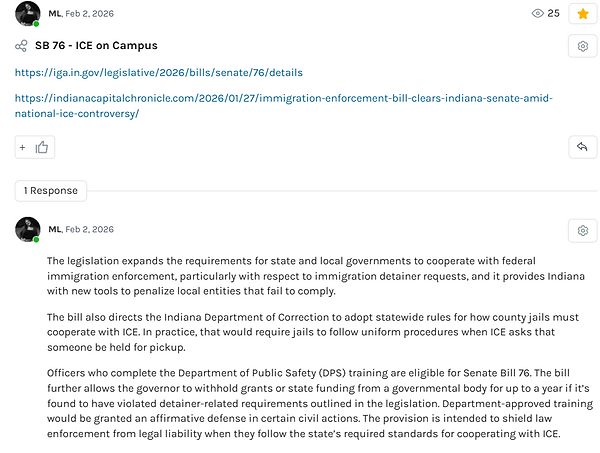
Discussion I created in Class to keep classmates aware
Advocacy Across Institutional, State, and Federal Levels
-
Advocacy has been a consistent and evolving thread throughout my work in higher education, and it has taken shape across institutional, state, and federal contexts. Through these experiences, I have developed a deeper understanding of what it means to advocate not only within a single institution, but also across systems where policy decisions directly shape students’ educational experiences.
-
Within my involvement in Indiana University Student Government (IUSG), I have been able to stay closely connected to institutional priorities while also engaging in broader conversations about student needs and policy impact. This work expanded further when I was invited to participate in the Association of Big Ten Students, where I received training on effective advocacy within large, complex systems. Through this experience, I met with representatives and senators and learned how to translate student concerns into clear, actionable policy language, including drafting one-pagers centered on issues such as HR 6718, which addresses professional degree classification and graduate student funding.
-
I also engaged in advocacy conversations surrounding proposed changes to international student “duration of status,” including concerns about limiting students to four years and the broader implications such a change could have on academic progress, stability, and access for international students.
-
At the institutional level, I recently wrote an op-ed for one of my graduate courses that highlighted the graduate student experience within predominantly undergraduate institutions. In this piece, I centered the ways graduate students are often overlooked in institutional decision-making processes, despite playing a critical role in teaching, research, and campus operations. Writing this allowed me to reflect more critically on how institutional structures can unintentionally marginalize graduate students and reinforced my commitment to elevating their voices in policy and practice.
-
Taken together, these experiences have shaped my understanding of advocacy as both relational and strategic. It requires listening deeply to student experiences, translating those experiences into policy-relevant language, and engaging decision-makers across multiple levels. Most importantly, it has reinforced my belief that student affairs professionals have a responsibility to advocate beyond institutional boundaries to ensure that student voices are represented in every space where decisions are made.

Duration of Status One Pager

HR 6718 One Pager
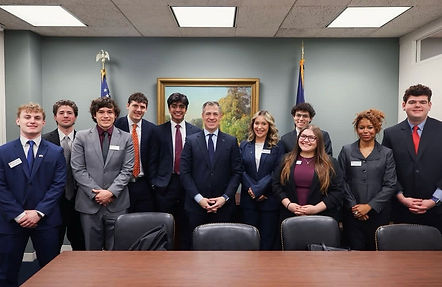


Meeting with Represenatatives and Senators
Association of Big Ten Students

Op-Ed - The Ones Forgotten: A Focus on the Graduate Student Experience in a Majority Undergraduate Space