Advising and Support
Foundational Outcomes Achieved:
-
Exhibit culturally inclusive active listening skills (e.g., appropriately establishing interpersonal contact, paraphrasing, perception checking, summarizing, questioning, encouraging, avoiding interrupting, clarifying).
-
Establish rapport with students, groups, colleagues, and others who acknowledge differences in lived experiences
-
Facilitate reflection to make meaning from experiences with students, groups, colleagues, and othersoFacilitate individual decision making and goal setting
-
Appropriately challenge and support students and colleagues. Identify when and with whom to implement appropriate crisis management and intervention responses.
-
Know and use referral sources
-
Seek opportunities to expand one’s own knowledge and skills in helping students with specific concerns as well as interfacing with specific populations within the college student environment
-
Know and follow applicable laws, policies, and professional ethical guidelines relevant to advising and supporting students’ development.
How did I achieve these foundational outcomes?
Intentionality within my 1:1's with Students
-
Each first meeting begins with a collaborative intake conversation in which we explore their academic journey, involvement outside of Union Board, post-graduation aspirations, and their personal "why" for joining the organization. From there, we co-create both a SMART professional goal tied to their development within Union Board and a personal goal that I can help hold them accountable over time. For instance, one student wanted to improve their time management, so we developed a system for entering deadlines, meetings, and commitments into a calendar with reminders. Every subsequent meeting intentionally begins with ten minutes of genuine conversation. Whether that means talking about a recent exam, spring break plans, family stress, or the latest TikTok trend. I believe students need to feel that they come first and work comes second. We then reflect on recent events, discuss what went well and what could be improved, and set a clear agenda for the week ahead.
-
I did this similarly over the summer when I was completing an internship as an Area Coordinator for Brown's Pre-College Team. I oversaw 8 resident assistants from different universities across the United States. We set both professional and personal smart goals that we discussed weekly in our 1:1's. This allowed them to still pursue their passions outside of the job they were doing, while I created a space of accountability.

First Meeting Template with my Students
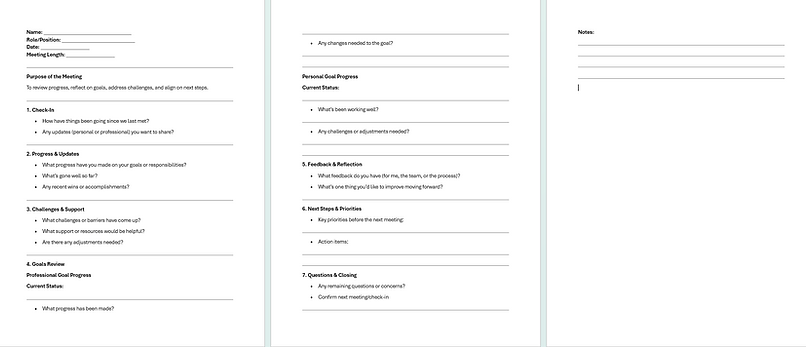
Meeting Template for my Students
Handling Conflict
-
When it comes to conflict, I prioritize helping students build the skills and confidence to navigate situations on their own, with guidance rather than intervention. I encourage them to take the lead in conversations, offering advice and support along the way. If a student feels anxious or unsure, I’m happy to sit in as a support system, only stepping in when it’s truly necessary. Creating a space where students feel comfortable bringing forward concerns is really important to me.
-
When a conflict arises, I start by talking through the situation with the student: whether they’ve come to me directly or I’ve heard concerns from someone else. From there, we discuss what they feel comfortable doing next and map out an action plan for addressing the issue themselves. I make sure they feel prepared and supported going into that conversation, and I always follow up afterward. If the situation hasn’t improved, that’s when I step in more directly.
-
I also believe strongly in holding students accountable. This is not to tear them down or hurt their feelings, but to support their growth and development as leaders. Accountability, to me, is an act of care. It means being honest, setting clear expectations, and challenging students to rise to their potential. I want them to walk away not just having had a good experience, but having grown into more confident, capable, and self-aware leaders.
-
In my experience, I’ve had to address situations where comments made within a student staff or team created discomfort. In those cases, I either addressed the issue in the moment or followed up individually to ensure it was handled thoughtfully and appropriately.
Referral Knowledge and Utilization
-
I effectively identify student needs that extend beyond my direct role and connect students with appropriate campus and community resources, including facilities, catering, campus offices, and student organizations. I focus on making sure students are directed to the right people who can meaningfully support their goals and help bring their ideas to life, rather than simply providing surface-level answers.
-
When students come to me with ideas or needs, I start by talking through what they are hoping to accomplish and helping them identify potential campus partners who could support their vision. I encourage students to take the lead in building those relationships while I guide them through the process and help them feel confident navigating campus systems. When needed, I assist with outreach or help connect with key stakeholders, but I prioritize empowering students to build those connections themselves.
-
For example, I encouraged a student serving as Director of Mind and Body to partner with a campus dance organization to co-create a “Move and Groove” event. The event was successful and created a meaningful opportunity for collaboration with a new organization, while also expanding awareness and engagement within their programming. I also supported the same student in partnering with the Indiana University Student Government Director of Health and Wellbeing for International Kindness Day, where they distributed goodie bags with kind messages to promote kindness across campus. This partnership strengthened relationships with another governing student organization and expanded the students’ ability to collaborate across campus leadership structures. Overall, I see this work as helping students understand how to access campus resources, build intentional partnerships, and leverage collaboration to expand both their programming and their leadership impact.


Move and Groove Event with Student Dance Organization